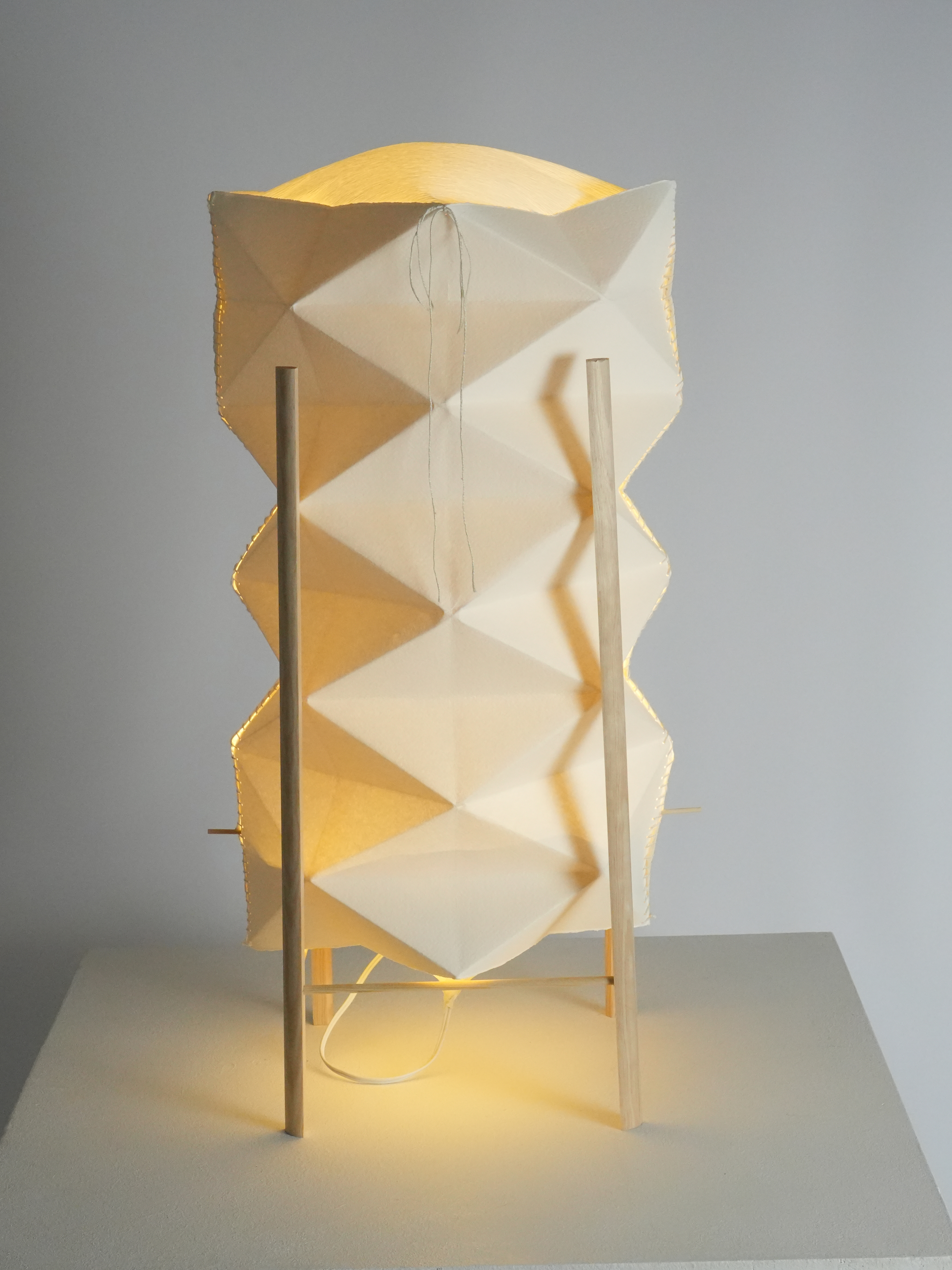
A Reimagined Plastic Chair Based on Modernist Principles
Inspired by Gerrit Rietveld’s Red and Blue Chair (1917), this project explores how a conventional plastic chair can be redefined through classic modernist ideas. The 1917 chair was analytically deconstructed to become three key principles: additive design, stripped geometry and contrast. These were applied to the plastic chair and the parts together became a reconstructed, reimagined version, a mix of the chairs. Exposed connections, clear rectangular geometries and the combination of plastic and stainless steel create a design that challenges the perception of plastic as disposable, instead proposing a more durable, honest and materially aware object.
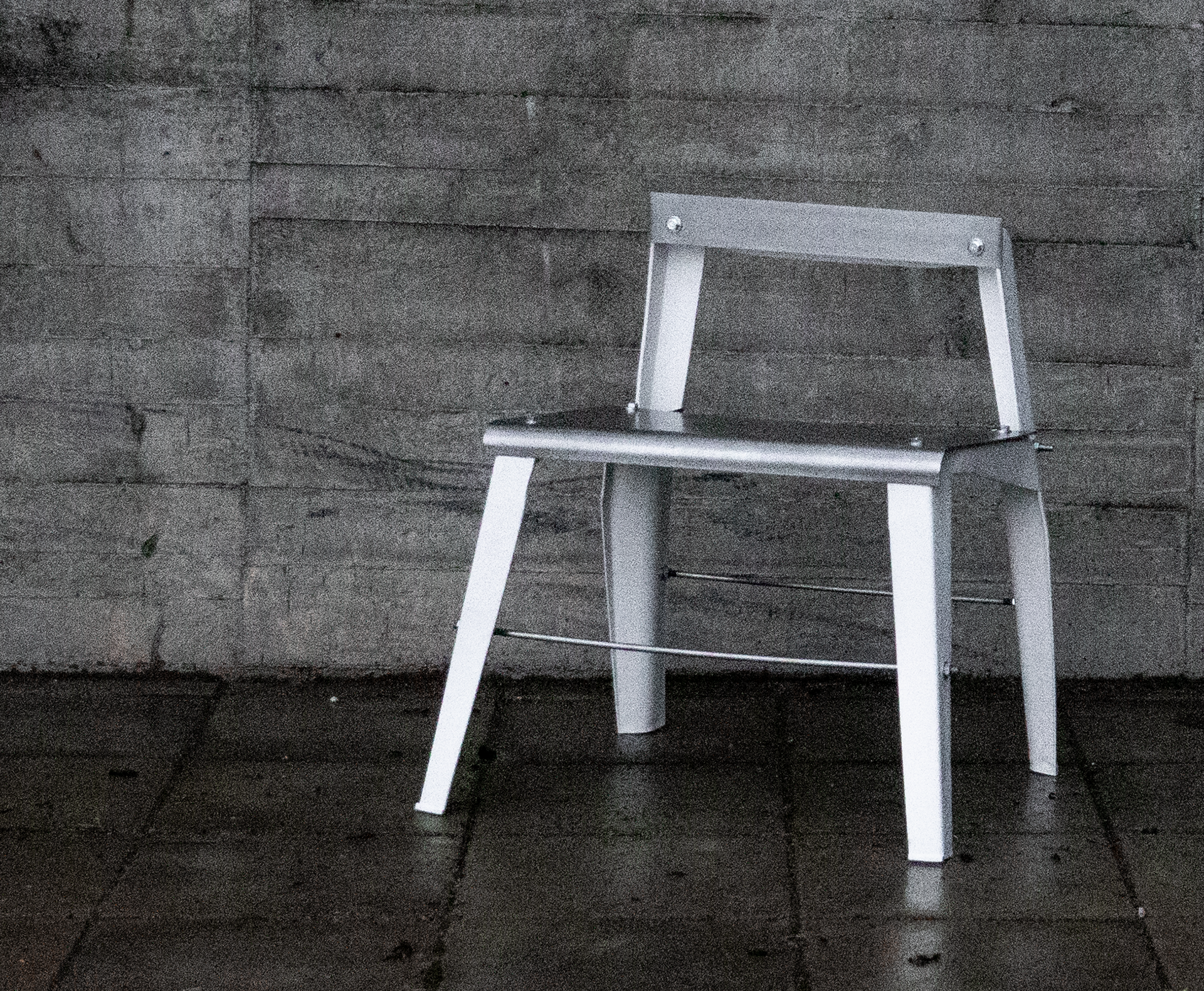
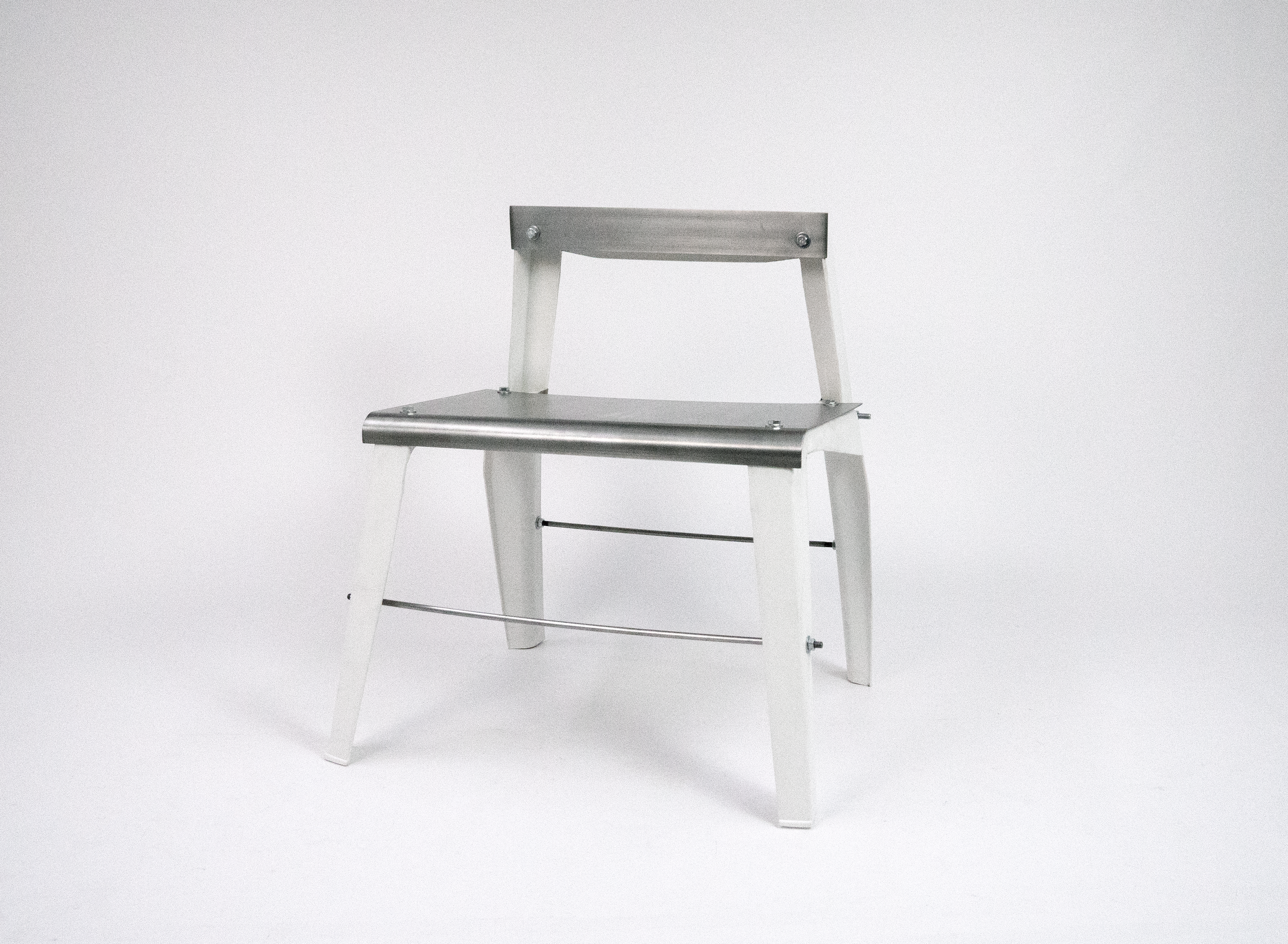
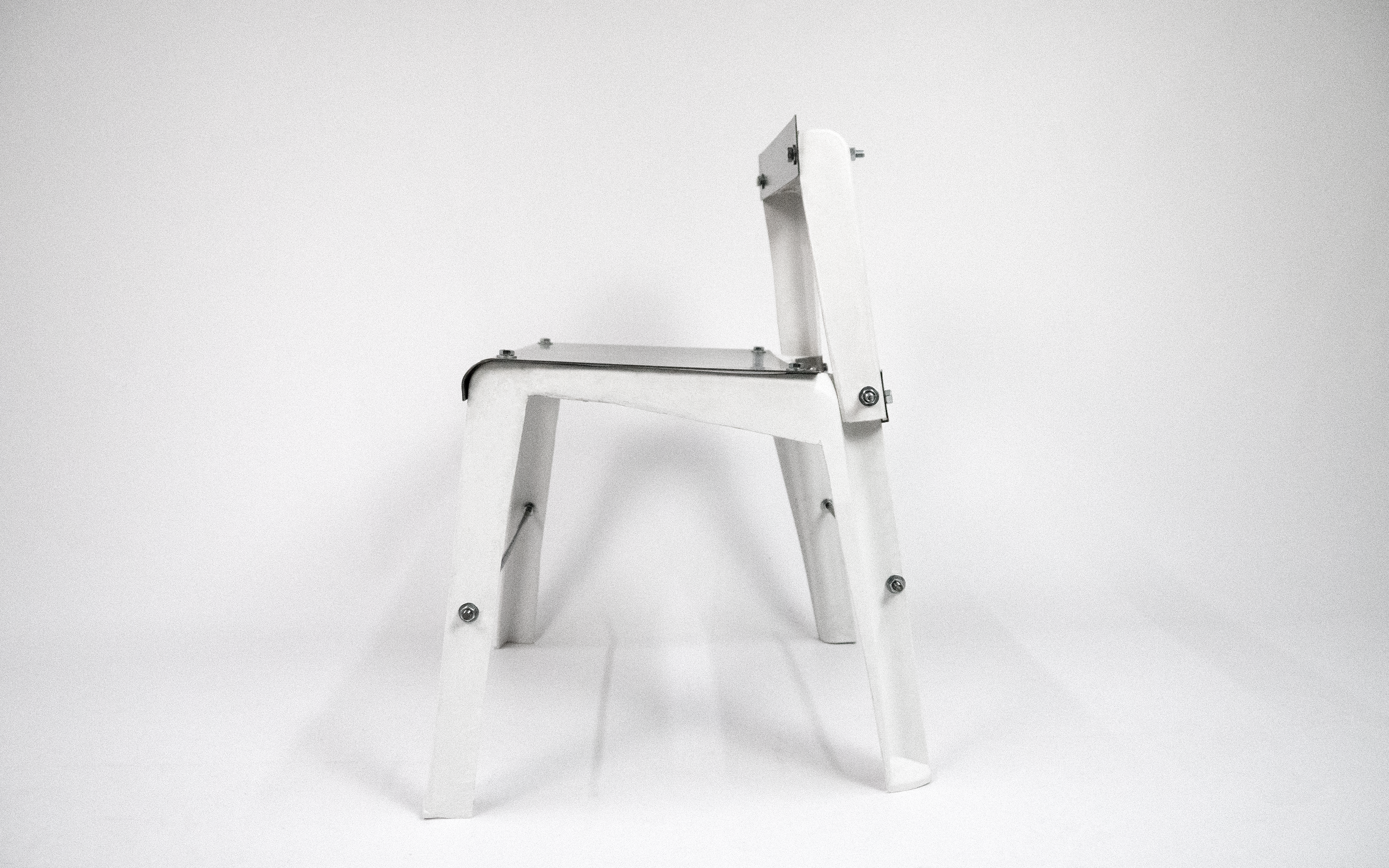
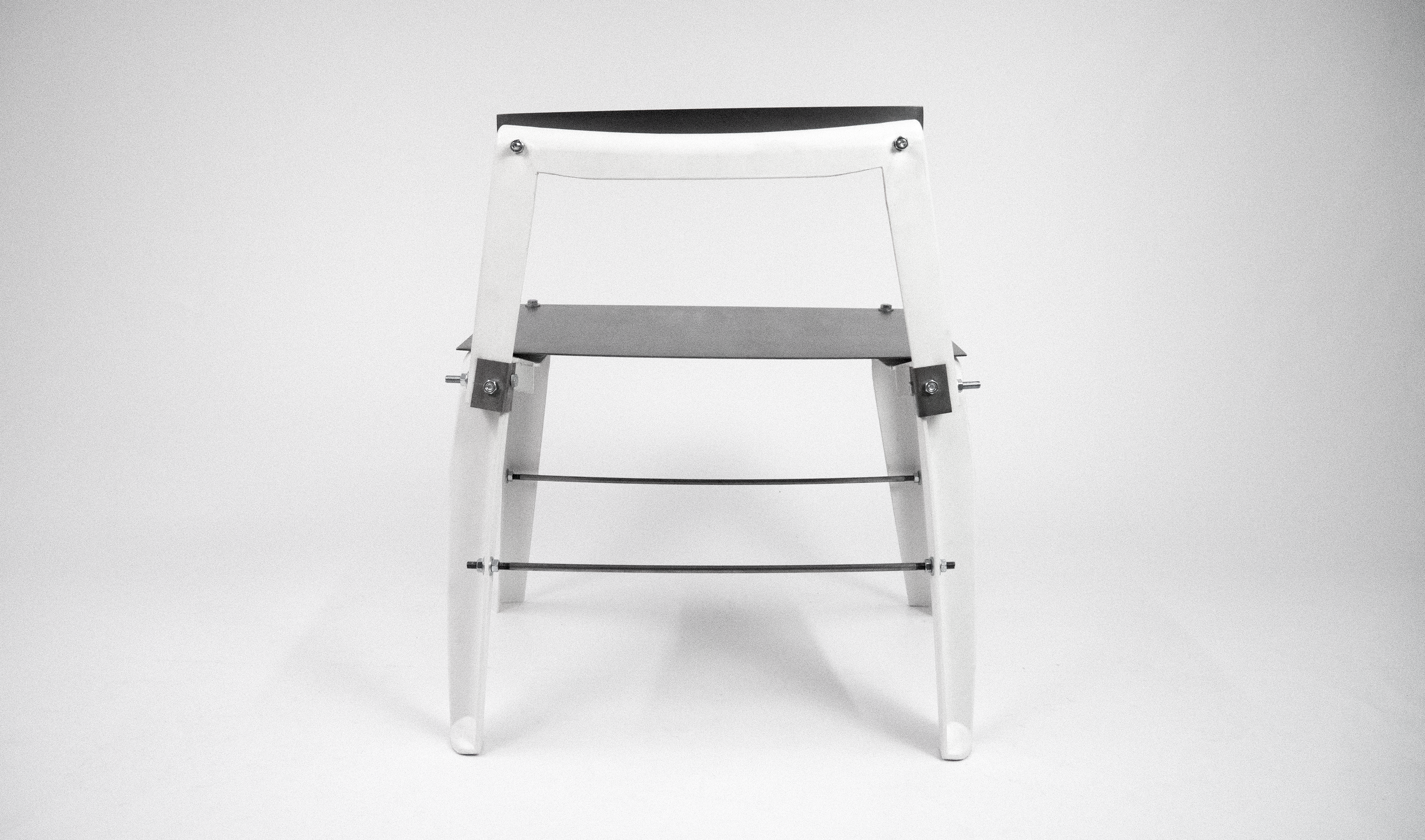
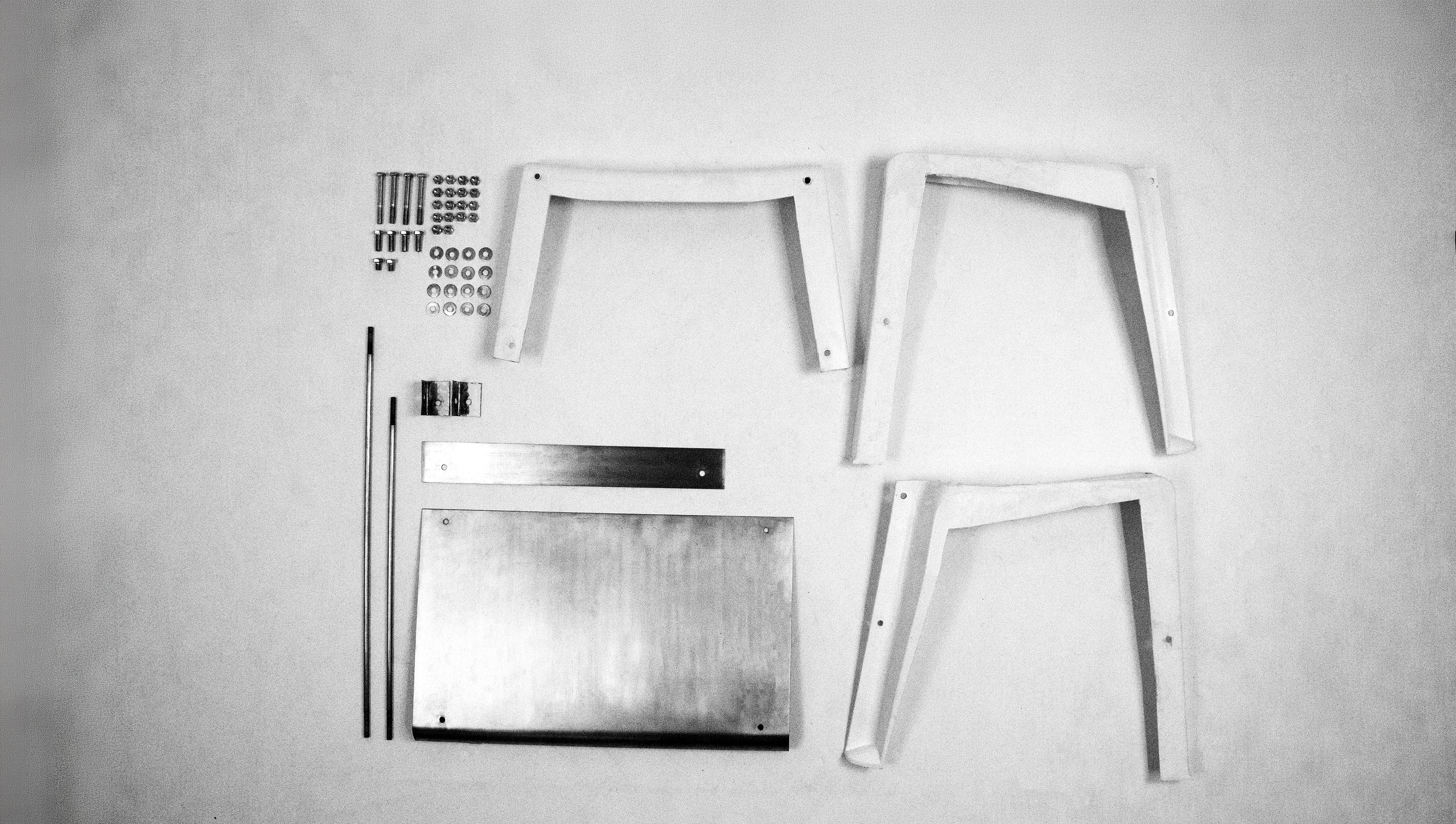
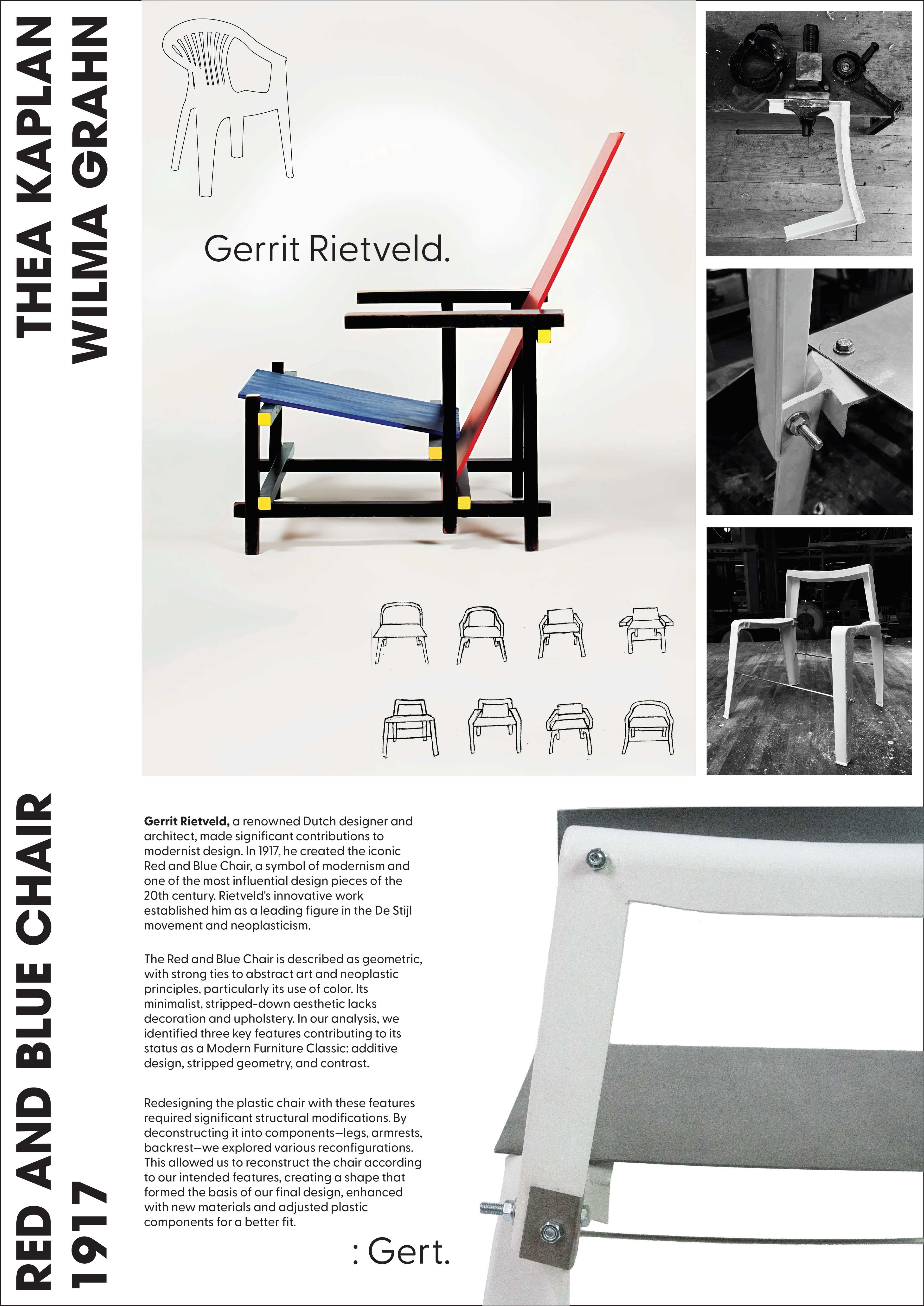
Developed in collaboration with my classmate Wilma Grahn, this project reimagines Gerrit Rietveld’s Red and Blue Chair (1917) through the character of the white plastic chair. Guided by principles of additive design, stripped geometry and contrast, we deconstructed and reconfigured the chair into an honest, modular structure defined by clear geometric forms and contrasting materials. Through iterative full-scale prototyping, we explored ergonomics, form and material expression.
We worked closely throughout the project, planning our workflow together, dividing tasks and developing ideas in parallel. This side by side collaboration enabled continuous exchange of perspectives, early concept testing and shared decision-making. Through a hands-on, iterative process, we refined the design in real use scenarios. Strong communication and coordination were central, resulting in an efficient process and a cohesive final outcome that reflects our combined approach.